
Scrapped material is a normal part of production, but how you record scrap inside Cetec ERP affects job costing and reporting. When someone on the floor requests more parts, they have two different scrap-related options that control how those requests are labeled and how scrap shows up in downstream reports.
Scrap as a Parts Request Reason Code
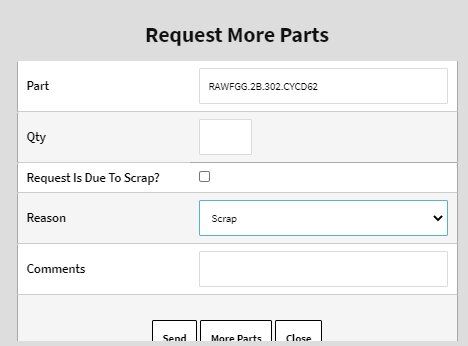
When a user submits a parts request in Cetec ERP, they can choose a reason code to explain why more material is needed. One of those reason codes is Scrap. Selecting Scrap as the reason code tags that request so you can see it later on the Parts Requests list and understand which requests were driven by scrapped material.
In this context, Scrap is an identity marker only. It helps you organize, filter, and review parts requests that were created because material was scrapped, but it does not change how material is relieved or how cost is calculated. The request is simply labeled so you can analyze patterns in scrap-related requests over time.
The Request Is Due to Scrap Checkbox
Alongside the reason code, there is a separate checkbox labeled Request Is Due to Scrap. This setting drives the Scrap column on the part request list. This helps indicate which requests were due to scrap without using the scrap reason code.
Over time, these flagged requests help you understand how much of your total material consumption is tied to scrap rather than good production. This supports tighter cost analysis and quality reporting without changing how the job itself is processed.
How to Use the Two Scrap Options Together
In most cases, your team should use the Scrap reason code whenever a request is created because material was scrapped. Doing so keeps the Parts Requests list readable and gives supervisors a quick way to review where scrap is driving additional demand for material.
Use the Request Is Due to Scrap checkbox when you want that request to be flagged as Scrap without having to set the reason code.
Key Takeaways
- The Scrap reason code on a parts request labels the request so you can filter and review scrap-driven requests on the Parts Requests list.
- The Request Is Due to Scrap checkbox drives the Scrap column on the part request list to show which part requests were due to scrap.
- Neither option changes how Cetec ERP relieves material or calculates cost; they change how scrap-related usage is identified in reports.
- Using both fields consistently gives quality, production, and finance a clearer picture of where scrap is driving extra material demand.
Conclusion
Scrap options on parts requests in Cetec ERP are simple controls that carry real reporting impact. When your team understands the difference between the Scrap reason code and the Request Is Due to Scrap checkbox, you can keep parts requests organized, maintain accurate scrap percentages on invoice detail reports, and support better decisions around material usage and quality issues.
For step-by-step guidance on accounting for scrapped materials and entering parts requests, review the scrap material how-to resources on the Cetec ERP support site.
Related articles
